
Why coppice?
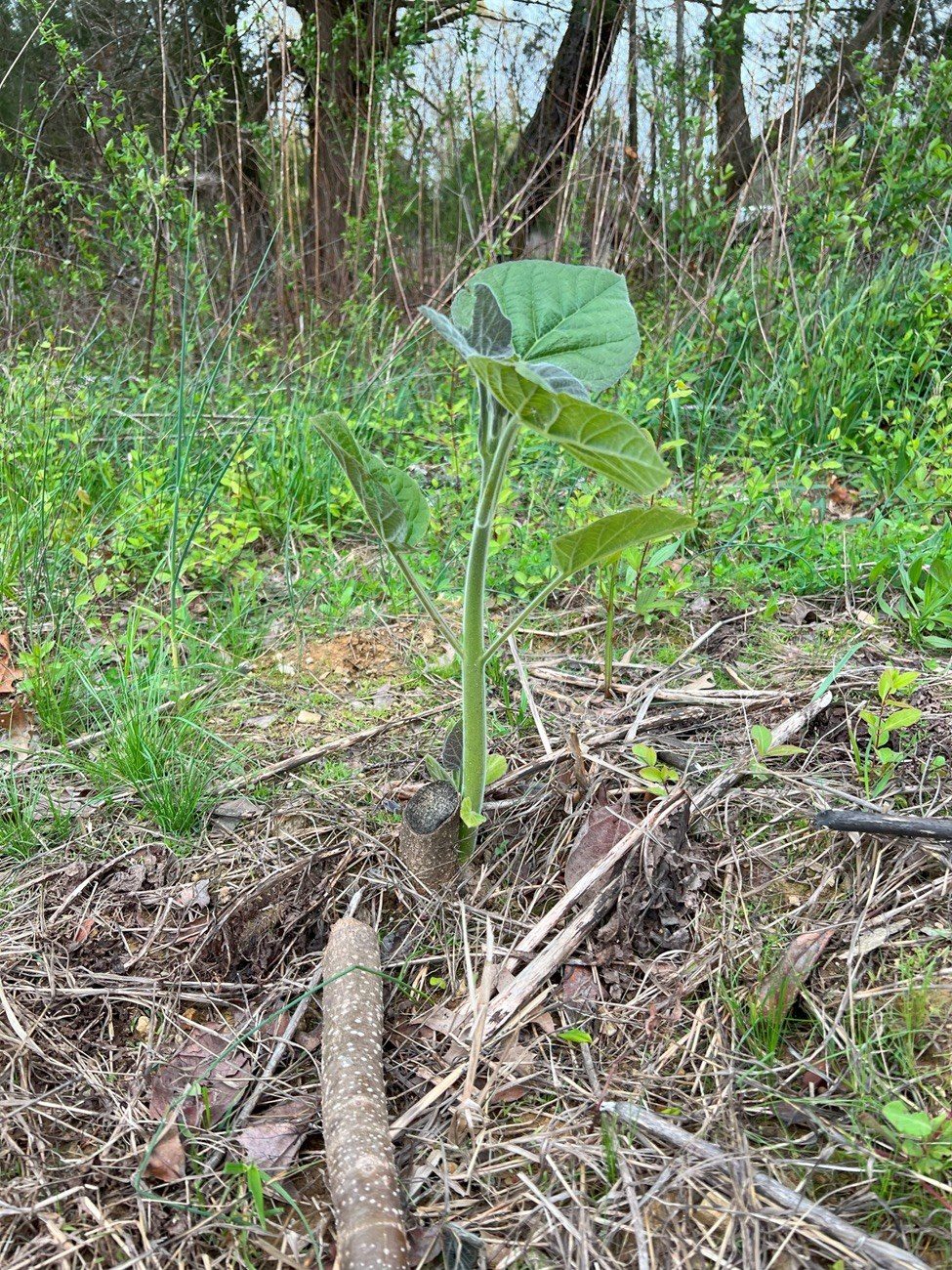
The most beneficial action for a thriving Paulownia tree is initiating the coppicing process, which involves cutting it down. In the initial year of planting, our primary focus was on fostering a robust root system, with little regard for stem shape or straightness. These roots now serve as a reservoir of stored energy, propelling your trees to regenerate rapidly after being cut to ground level.
In the current coppice year, our attention shifts to managing the regrowth and channeling the tree's energy into a single, straight, fast-growing stem. This strategic approach is key to maximizing the merchantability of your stand.
When to coppice
Ideally, Paulownia trees should be coppiced at the beginning of spring. In more southern climates, you will look to coppice as soon as the trees start showing buds and springing to life. This is a crucial year for the long-term merchantability of your stand. You will want to work closely with our team to decide if you should coppice your stand after the first growing season or wait until the second growing season. Generally, your stand should be coppiced after the average root collar diameter of the stand exceeds 2 inches across.
- Make the coppice cut in late winter or early spring or as soon as the tree shows small green buds towards the top of the stem.
- Do the coppice while those buds are still small. It will only take 1–2 days for them to grow noticeably larger.
- The Paulownia trees will break buds when the stem temperatures get above about 65°F for more than a few hours each day, and root growth (and coppice shoots) will activate when the soil, at 2–3" deep, has warmed to stay above 55°F for most of the day. Do not let the above-ground shoots/buds get more than 1" long before doing the coppice; the new shoots are a sign that sap flow has commenced, and the stored energy reserves (starch etc.) in the roots are being mobilized upwards. The aim is to coppice before that energy has left the underground store.
- The reason for doing a last-minute coppice, which involves waiting until the tree is ready to shoot rather than cutting it off in mid-winter, is to minimize the period during which a cut stump is exposed. This approach helps to prevent drying out and invasion by fungi and also reduces the risk of early shoots being burned off by mild ground-level frosts. Within a few weeks, a healthy tree will re-shoot and compensate for most of the lost growth by the end of the season.
Do I coppice everything?
In most cases, you will coppice the whole stand. However, in some scenarios, it will be better to wait another year to coppice everything or coppice only those trees with a ground-level diameter greater than 2". Your World Tree representative will help you make the best decision.
Many farmers assert that the best flush of growth you will get is from a coppiced stem. Coppicing all trees means you may have the risk of needing to re-coppice some again the following year if the height of the new stem is still not desirable.
Waiting another year to coppice those trees with a smaller diameter will give the trees another year to grow their root systems but may leave you a more difficult job the following year. You'll have a thicker stem to cut through and more material to dispose of if it puts on a lot of growth during that year.
How to coppice
- First, remove all weeds close to the stem for better access to making a clean cut. Keep the more distant weeds at a short height, as they will compete for sunlight, nutrients, and water while the tree is in a state of urgency.
- Follow-up weed control may be needed in the 3–4 weeks after the coppice before you apply fertilizer to the tree (don't fertilize the weeds). In this period, the new coppice shoot can grow to be about 2 ft. tall. It will have soft new leaves and green bark at low height, so be especially careful that these are not contacted by the herbicide. Similarly, cutting or killing weeds again before the second dose of fertilizer later in the season will be beneficial.
- Cut as near to ground level as possible without damaging your cutting tools. Even on larger stems (>4" diameter), you should be able to leave a stump of less than 1–2" above ground. On small stems, aim to make the stump less than ½" tall. In some cases, a strong shoot may arise from underground near the stump; these are preferred to others if they are of equal or better vigor as they will be well anchored. Low-cut stumps will form new shoots near the ground, and these will be more wind-firm as they develop compared to shoots originating 2" or higher on the stump.
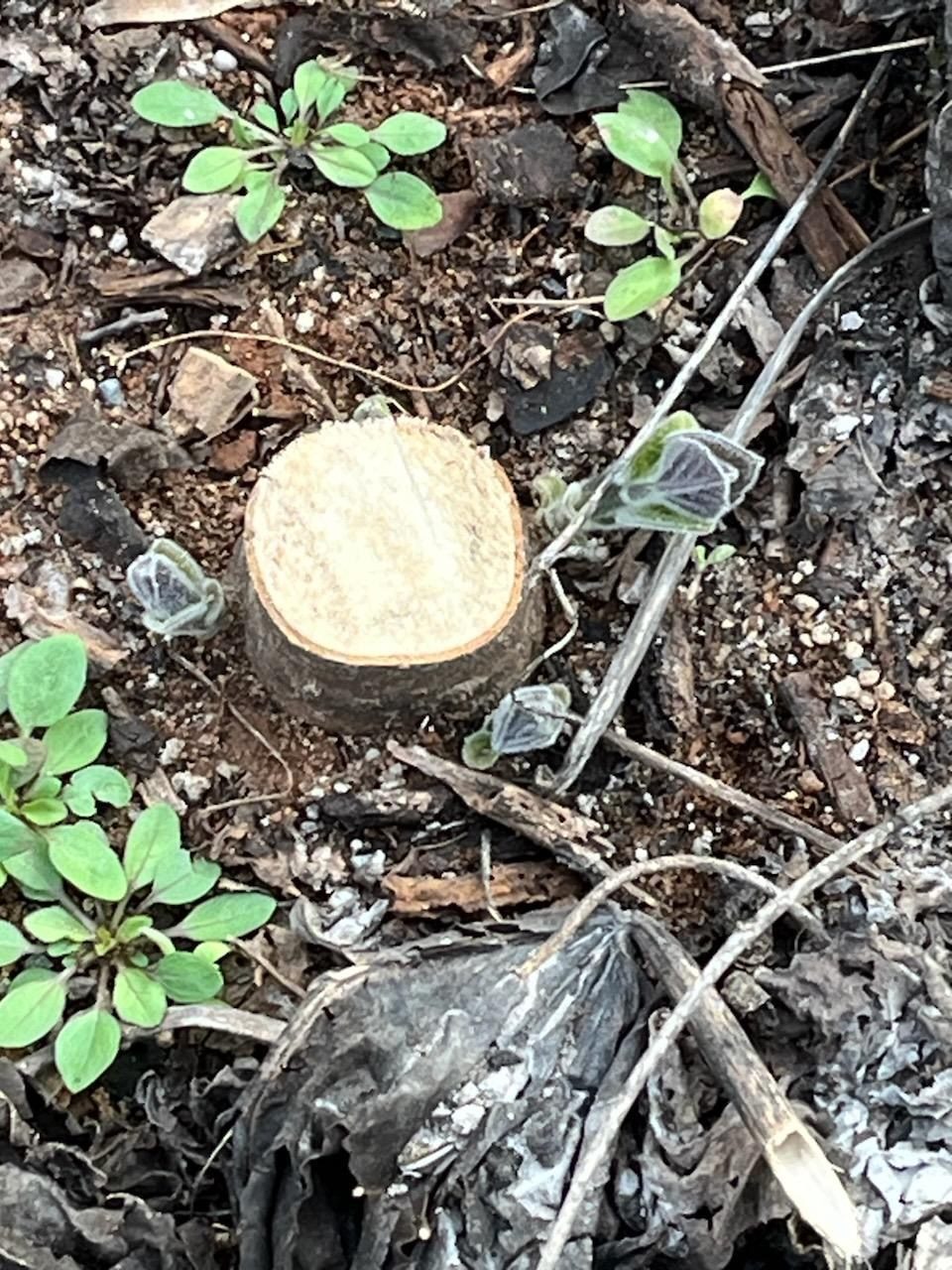
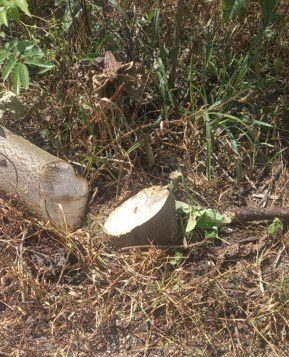
Cut at the right time and very close to the ground, like the stumps pictured here.
Don't leave stumps that are cut too high. High stumps will encourage multiple shootings and weakly anchored stems.
Tools
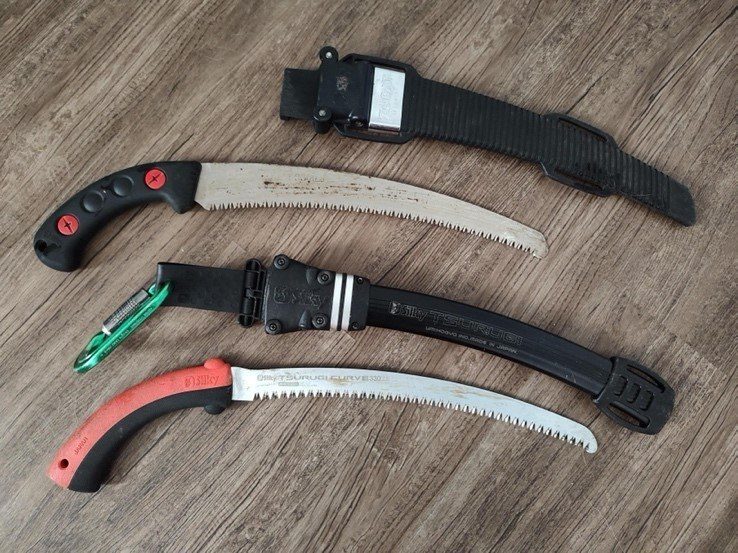
- Use a sharp, sanitized tool that can cut cleanly through the stem without too much effort.
- A long-handled lopper with bypass cutting action is suitable for stems slightly more than 1" ground diameter. A curved, long-toothed pruning saw works well for stems larger than 1" ground diameter. The pruning saw will also be useful for removing branches later in the season.
- Avoid using manual or hydraulic shears that have a crushing action. They will mash or lift bark on the stump, create deep cracks in the stump, or cause torn-out or remnant protruding wood fibers. Stump cracks and fiber tears increase the loss of moisture from the cut surface in dry climates or harbor fungi and insects in wetter climates. The aim should always be to make a clean cut with minimal damage to the remaining bark on the stump.
- With all tools, try to keep the cutting edge out of contact with the soil. Soil particles and rock fragments will quickly dull your tool.
Thin the shoots to one leading stem
Thinning must be done just before the tallest shoot is 18" high.
Don't wait any later. Otherwise, you will end up with a leaning trunk and lower-value timber.
- Often, there will be multiple coppice shoots from one stump; 2, 3 or 4 are common. Usually, the first shoot is the most vigorous, but sometimes, one of the secondary shoots will spring from a lower or better-anchored spot on the stem. When the tallest shoot is close to 18" high (i.e. a week or so before first fertilizing), it is time to select the strongest, best-anchored coppice shoot and cull out the rest.
- It's essential to do this culling reasonably early in the season. If the shoot culling is left to just a few weeks later, when the shoots are 3–4 feet high, they will already be leaning away from each other, looking to maximize their light. In this case, bending in the lower stem will be a permanent feature of the future tree's shape. Leaning trees have tension wood in their stem, which reduces timber quality and can cause sawn wood to bend.
- Don't thin too early... let the dominant shoot clearly express its dominance before choosing which one to keep.
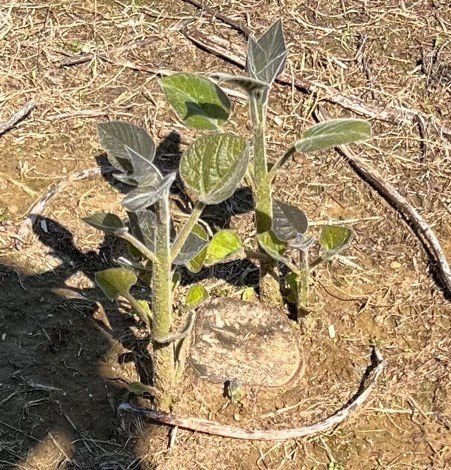
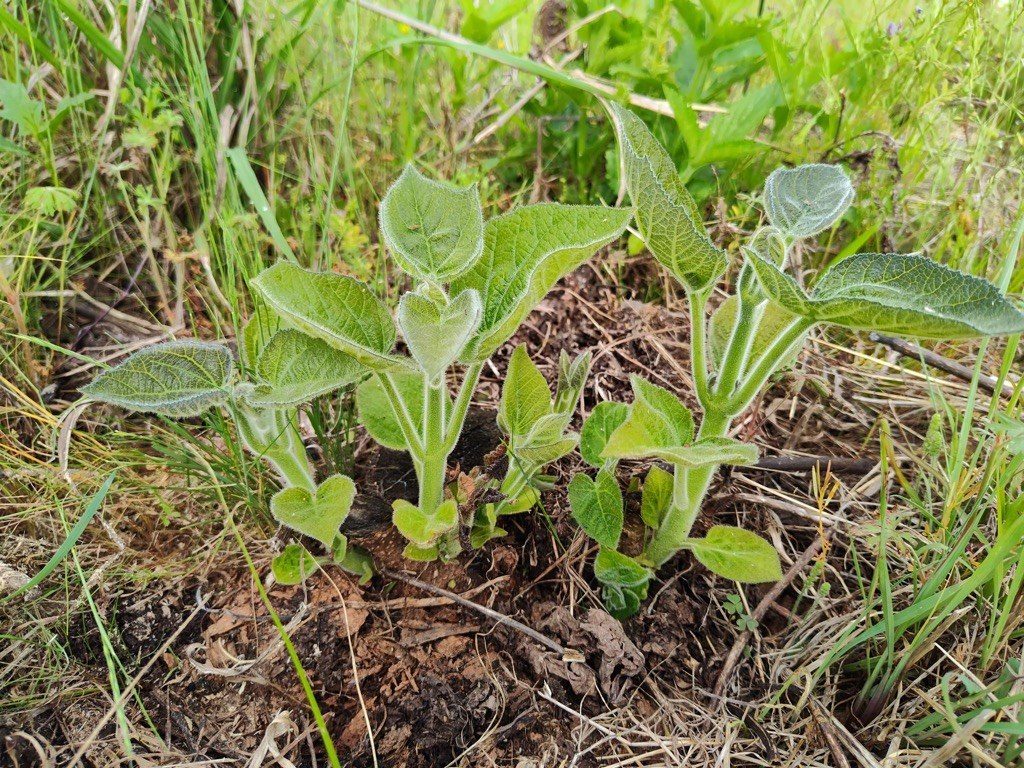
Full site preparation and timely coppice will produce a healthy stand of vigorous trees, growing strongly upward to generate valuable tall, straight logs. With the right conditions and your diligent care, your Paulownia trees will amaze and delight you. By the end of the season, you will be enjoying the cool, leafy shade of a tree much taller than you.
Applying fertilizer following coppice
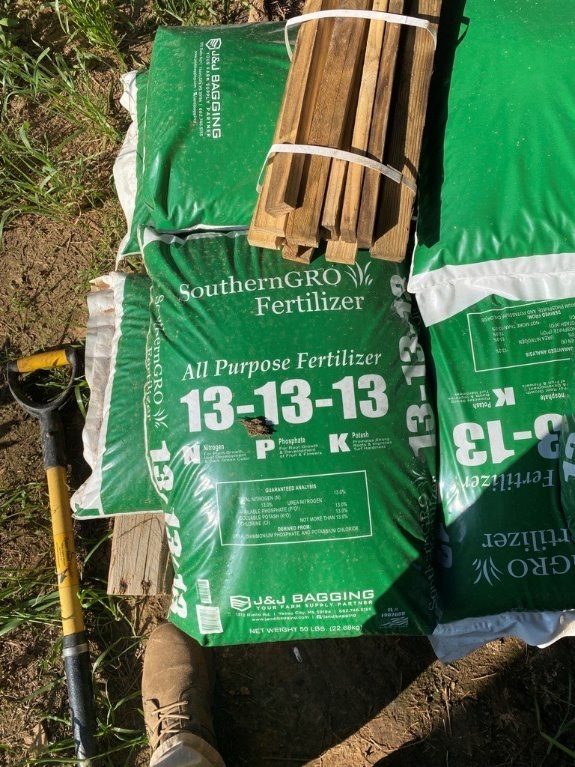
- Once the excess shoots have been culled and the new coppice shoot reaches about 2–3' tall, a fertilizer containing N, P, and K should be applied. The ideal fertilizer for your trees should be chosen according to your soil test recommendations.
- The trees will respond best if they receive at least two doses of fertilizer during the growing season.
- For the second application, it's best to use urea, a highly concentrated and soluble N (NPK ratio of 46-0-0).
- Apply the urea when the tree height reaches about 6 feet, but no later than the last week of July. This timing maximizes the trees' response to the fertilizer and minimizes the risk of nutrient loss.
- Note that urea is also very easily volatilized once it absorbs moisture from the air or the ground. If it doesn't rain shortly after the urea is applied, much of it might be wasted because it converts to gas. You should always aim to fertilize just before rain or water the fertilizer during or shortly after application. If you can smell ammonia in a day or so after applying urea, you are losing some of the nitrogen to the air.
- For alternatives to urea application, you can consider using a slow-release form of nitrogen or dissolving the fertilizer in water and spraying the solution on the soil around the trees. These options provide more flexibility in your fertilization practices.
- Scatter the fertilizer evenly on the ground surface in a circle about 2–3 feet in radius, starting about 6" away from the stump and new stem. Don't leave fertilizer particles directly touching the bark or in a concentration near the stump.
- Unlike the first year, the fertilizer is now scattered, not clumped, and there is no need to dig the fertilizer in. Ideally, try to choose a time when rain is likely to dissolve the fertilizer and wash it into the soil within 48 hours, or try to water it indirectly as part of the early season water supplements.