
In this first year, we are trying to establish a strong root system that will sprout a new, fast-growing stem the following year. Keeping the tree fed and watered is our priority.
Watering
Your Paulownia stand will require supplemental watering, especially during the first two years.
This is a crucial task that should not be overlooked.
You will need a watering rig or irrigation system if you don't already have one. There are many options, such as putting a water tank with a pump on a trailer pulled by an ATV. Others have put a tank in the bed of a pick-up truck or capable golf cart. Your Representative can walk you through your options as well as put you in contact with other farmers who have experience assembling and operating their watering rigs. In most cases, it's best to have 2 people available to operate the rig: one driving and one watering.
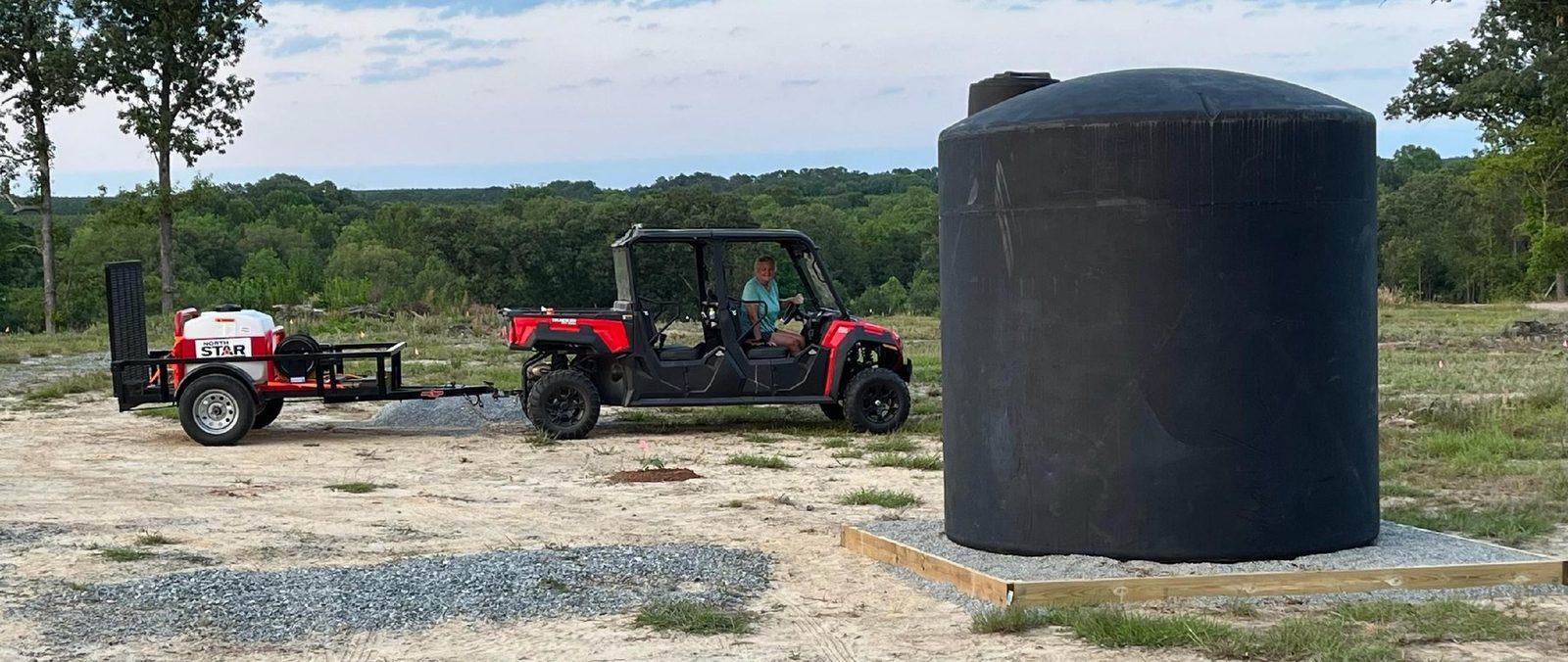
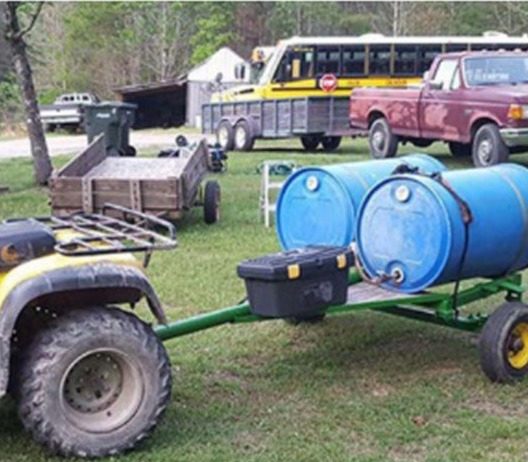
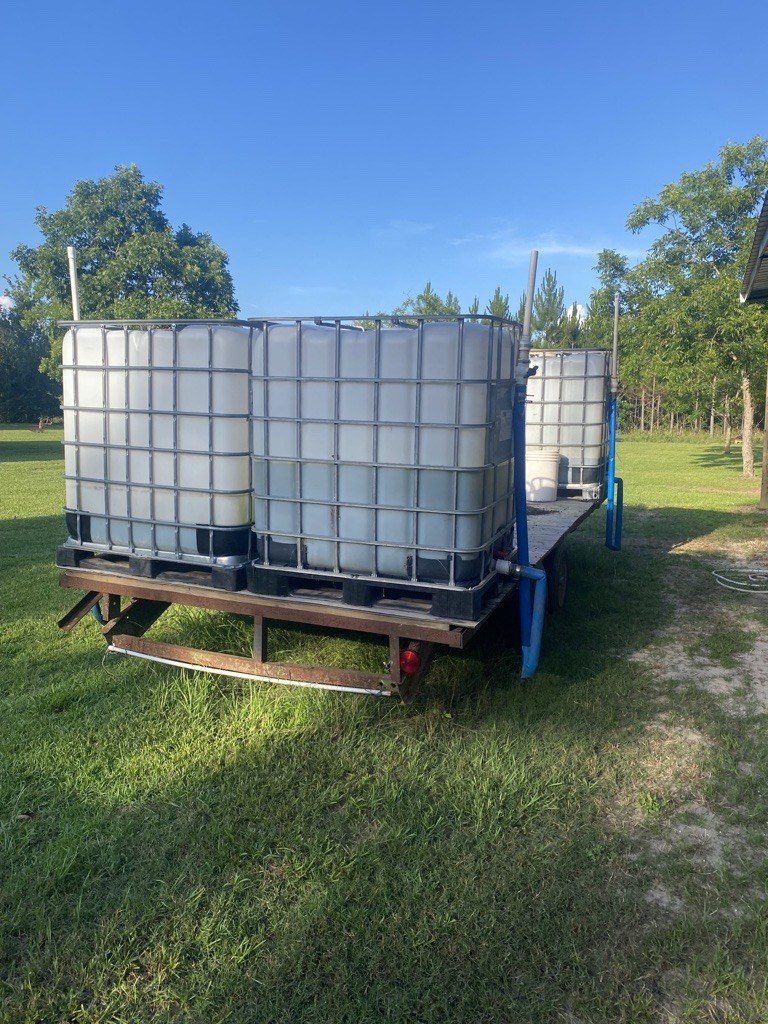
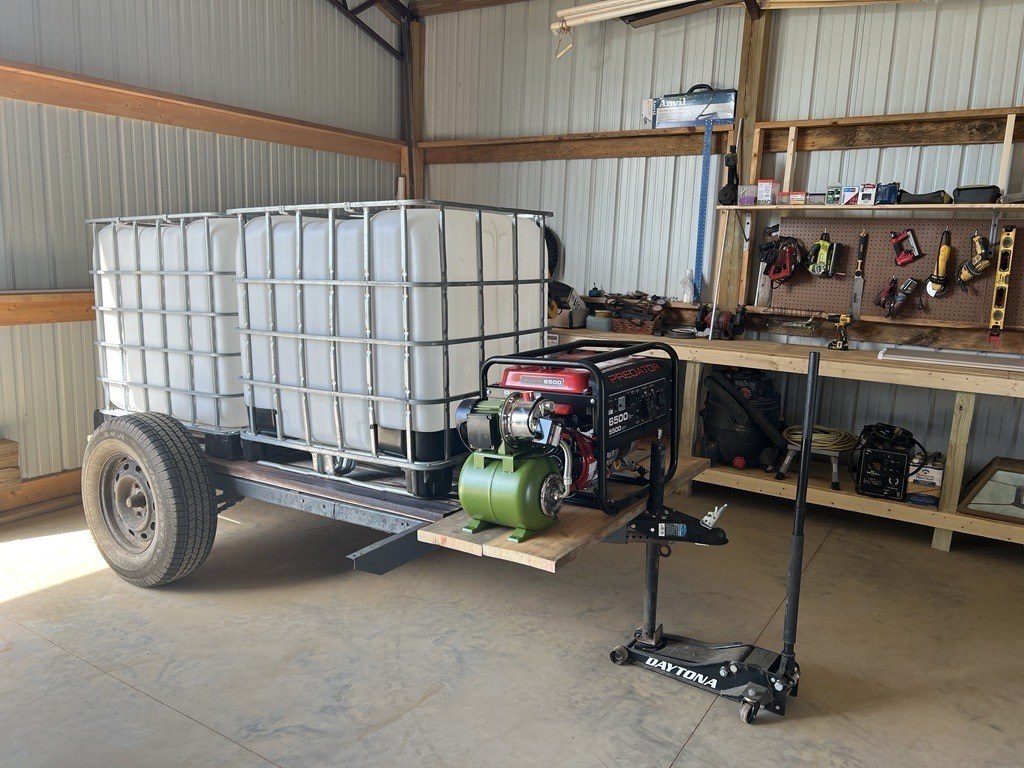
- Water every other day or 2 days per week to get the trees well-established if the soil is dry or you have had low rainfall (about 5 gallons/tree per week). Your young trees will benefit from less water more frequently. This will train the roots to grow deep into the soil. Vigilance will be required throughout the summer to ensure the soil does not dry out. It's much easier to under water than over water.
- Generally, we recommend watering each tree with about 1–2 gallons of water every few days; however, there are a few factors to consider when determining when to water and how much to water:
- Consider your soil type. Sandy soils will drain much faster, so they will need more water than other soil types that take longer to drain.
- Watering each individual tree takes time. Don't wait until the soil completely dries out to start watering again. If you do, the soil under some of your trees will dry out before you finish watering.
- Monitor your trees daily, if possible. If even a couple of your trees have wilted, that is an indication to water your entire stand as soon as possible. If you don't, all your trees will wilt in the next few days.
- Consider using an irrigation system, like drip irrigation, if you are in a low-rainfall area or don't have the time to water manually.
- If you can, pump lake or pond water into your watering rig. This will be far more beneficial to your trees than city water.
- Don't spray water on the leaves in hot weather.
- Don't make the soil around the roots constantly wet. Stagnant water can cause root rot.
- Don't panic if the leaves droop during the heat of the day (this is different from wilting). If the roots are healthy, the leaves typically perk up by morning.
Weed control
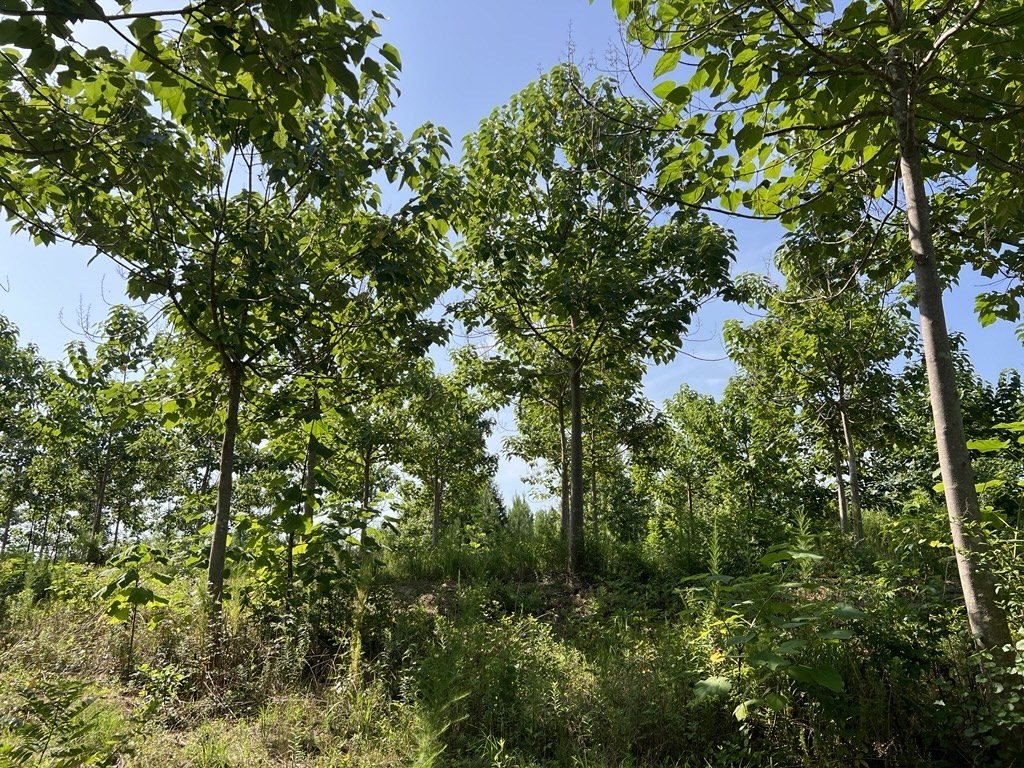
Weed control is integral throughout the first growing season. If you have established cover crops, they can inhibit weed growth, but some weed control will still be necessary. The goal is to ensure weeds do not outcompete and overtake the young trees. Keep the area 2–3 feet around the tree free of weeds. Maintaining a balance between controlling competition and covering the ground is important. We have found that farms with sufficient ground cover have had better initial survival and growth. There are many methods to control weeds, such as manual and/or mechanical removal, mulch, herbicides, etc. You should use manual or mechanical removal first, but if you are having persistent issues, some non-systemic herbicides can be used as well.
Please consult a World Tree Representative before using any herbicides not listed below.
Manual and mechanical removal
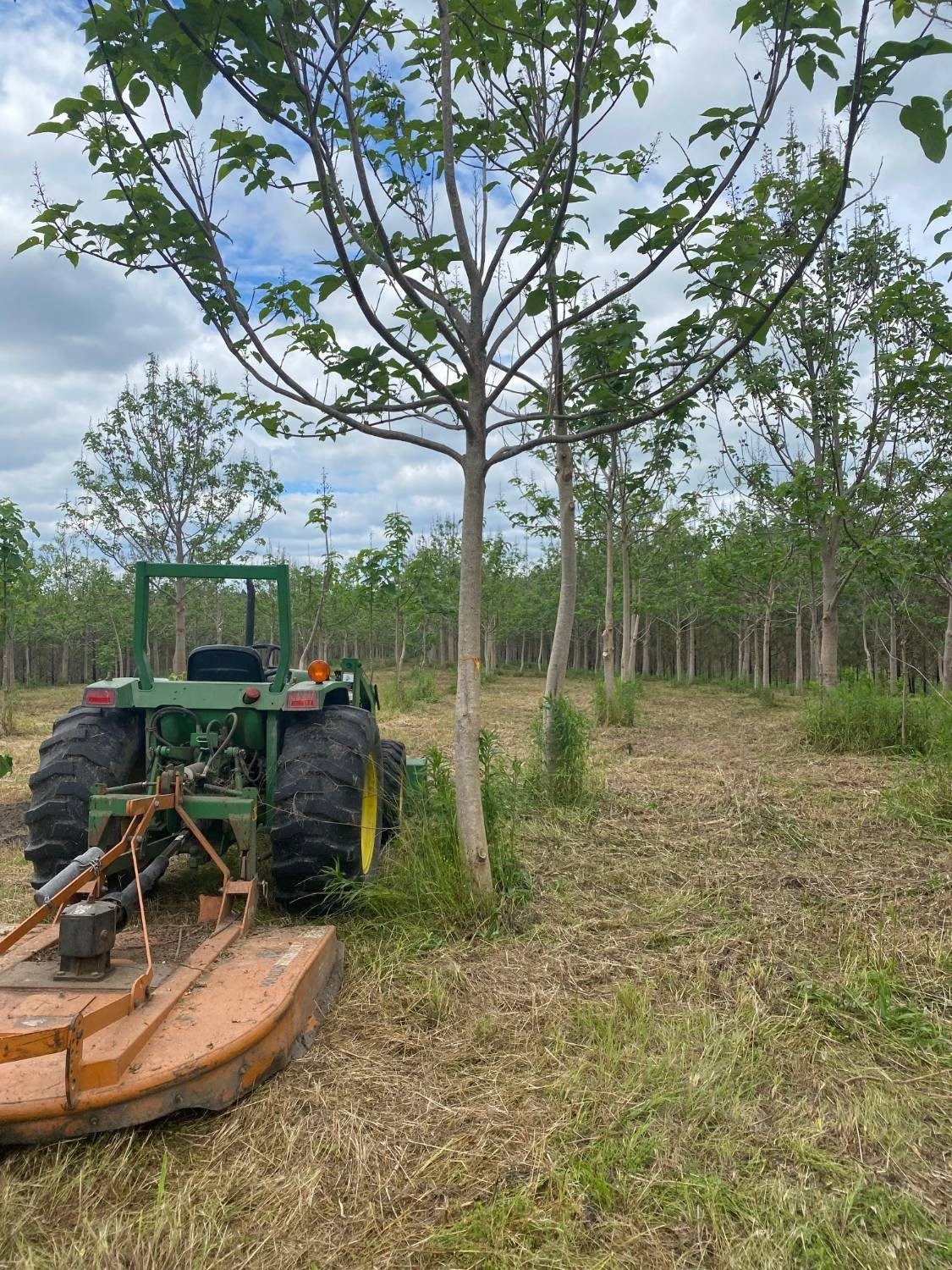
- Clearing the taller, green weeds and grasses close to the tree stem is best done manually or mechanically (e.g., pulling, mowing, crimping, slashing, or weed whacking) to avoid the risk of herbicide contact with the tree.
Mulch
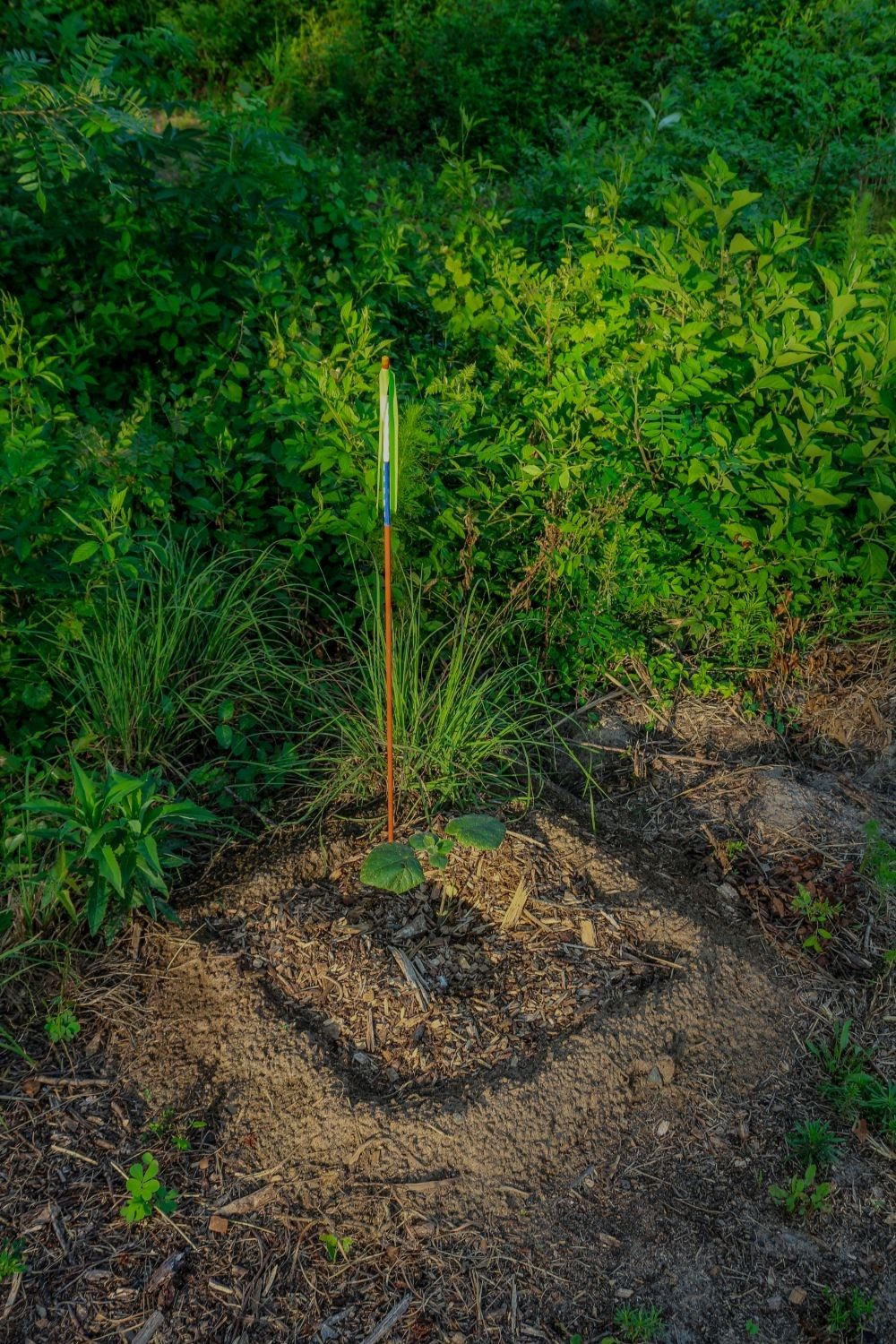
- Putting mulch around the base of your trees can suppress weeds by acting as a barrier between them and the sunlight they need to grow.
- Remove weeds around the base of the tree before putting down mulch.
- Mulch can also help your trees by retaining moisture in the soil and insulating the soil during extreme temperatures.
- To reduce the risk of trunk rot, ensure the mulch is not in direct contact with the tree trunk.
Non-systemic herbicides
- After the weeds are cut and show signs of re-shooting, non-systemic herbicides can be used around the new Paulownia tree shoots if you are very careful to avoid drift or vaporization contact.
- Herbicides are effective only if the weeds have actively growing shoots and bark; thus, semi-dormant weeds may not be effectively controlled.
- Use Glufosinate (Basta, Interline, Liberty, and others).
- Glufosinate is a non-systemic, foliar-active herbicide suitable for weed control of grasses and small broadleaves.
- Use according to directions and avoid any contact with the Paulownia tree roots, stems, or leaves.
- Use extreme caution when applying herbicides to avoid any contact with the Paulownia trees.
- Contact with small amounts of Glufosinate will not kill a Paulownia tree.
Avoid glyphosate! (Roundup)
- Use products other than Roundup. Even if the tree is still dormant, Roundup can be taken up through the bark of young Paulownia tree stems.
- Contact with small amounts of glyphosate will kill a Paulownia tree.
- Avoid pre-emergent, broadleaf herbicides.
- When considering using any other herbicide, read the labels carefully and consult with your World Tree Representative before purchasing or applying.
Lime and fertilizer in the first year
- It's recommended that soil tests be processed at your local extension office for at least the first few years at the beginning of the dormant season. This will help you plan your soil amendment and fertilization needs for the coming year.
- Like water, fertility in the first year of growth determines growth later in life. Soil tests are critical for determining what type of fertilizer to use and how much you need to apply.
Fertilize twice:
3–4 weeks after planting
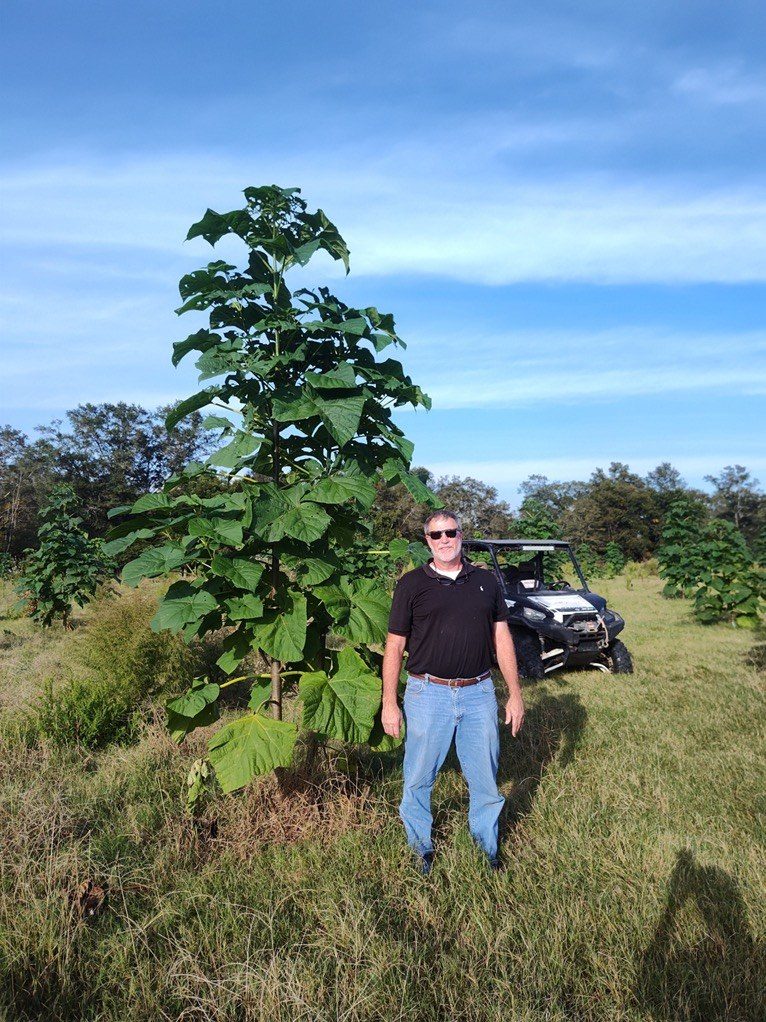
Use the dose recommended by your soil test results. Use a narrow spade to make deep slits in the soil about 5–6 inches from the stem of the tree (on either side) and drop in the fertilizer. Don't put any fertilizer in the planting hole upon planting, as it can burn the tree roots. Be careful not to wash the fertilizer into contact with the tree stem when you water after planting.
When possible, composted chicken manure or manure pellets are our recommended type, and they help promote deep green foliage. If chicken manure is not available, synthetic fertilizers may be appropriate. Slow-release granular fertilizers may be applied sooner after planting.
Contact your World Tree Representative for help planning your first fertilizer application.
12 weeks after the first application (or when the trees reach 24" high)
The recommended second application is urea, which is concentrated and highly soluble N (46-0-0). Fast-growing crowns will benefit from the application in the early midseason. Remember to apply when the urea is washed in with good rains, as it is very soluble in water. It will dissolve easily sitting on the surface of moist soil or grass. If not washed into the soil by rain, the nitrogen can be completely lost within 24 hours by turning into gas or volatilization. The alternatives are to use a slow-release form of nitrogen (most are more expensive than urea), get the fertilizer under the soil where it won't volatilize and escape to the air, or dissolve in water and spray the solution on the soil around the trees.
The N-P-K numbers indicate
If the leaves are dark green, the trees are getting adequate fertilizer. Pale green leaves mean that they are not getting enough nutrition. The older leaves' yellowing towards the stem's bottom is normal.
Lime and fertilizer in future years
Continuing routine soil tests at the beginning of the dormant season for the first few years will help to ensure proper nutrition for your trees.
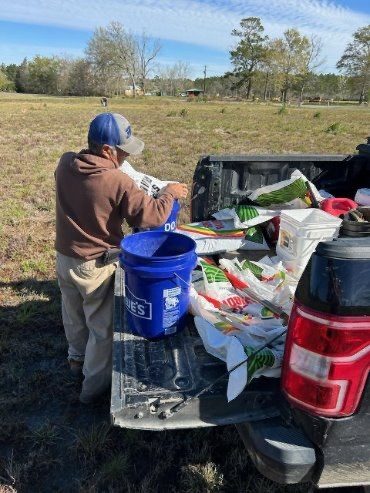
- If your pH is still low, it's best to get lime in the ground around December, so it has a few months to infiltrate the soil and neutralize the acidity. You'll want to apply the lime before a rain event so it gets dissolved into the soil. Pulverized lime has the potential to be blown away in the wind if not timed correctly. Scatter the lime broadly around the root zone at the recommended rates for your soil type.
- The first dose of fertilizer should be spread around late winter to early spring so it has time to soak in. When the trees begin to bud in the spring, we want the nutrients readily available to the roots. If you're using a quick-release synthetic fertilizer, you can wait until closer to bud break.
- The expanding leafy canopy needs a timely nutrient supply to achieve the most rapid growth. If you are in a dry summer zone, you may need to supply some fertilizer before the winter rains stop. Otherwise, the fertilizer will sit on the surface and be unavailable to the tree roots.
- Determine the amount to supply based on your soil analysis; scatter fertilizer evenly on the ground surface. Apply in a circle with a radius about one-third of the tree's height (i.e., a 3 ft. radius around the trunk for a 10 ft. tree; for a 15 ft. tall tree, apply in a 5 ft. radius). Don't apply fertilizer within 1 foot of the trunk; there are few feeder roots there.
- A more labor-intensive option is to make deep slits in the ground with a spade and insert the fertilizer into these holes. This helps it get deeper into the soil to feed the tree roots rather than the cover crops.