
Pests & diseases
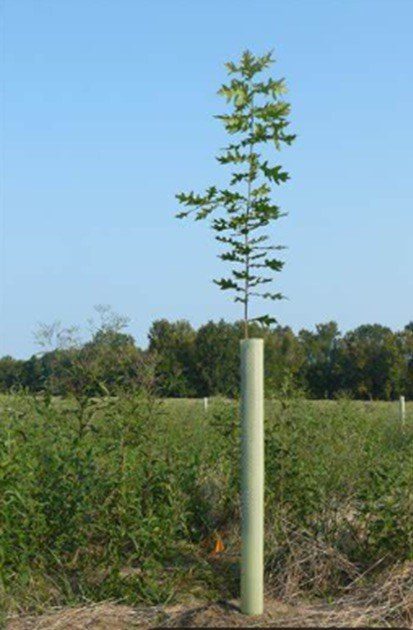
Insects, grazing animals like deer, and other pests can cause significant damage when you coppice your trees. These pests often eat the terminal bud of the tree, forming an unmerchantable log. If the terminal bud is eaten, the tree will fork at that height, and you will have to coppice it again the following year.
Paulownia tree leaves are a favorite food for grazing animals like deer and rabbits. If the browsing is light, homemade repellent mixes or commercial products like Deer Away, Des-EX, Petergenic-B, and Milorganite can be used. Repellents tend to be effective if used proactively rather than reactively. It's essential to re-apply the repellent every few days or after rain. However, if the deer problem persists, installing a physical barrier like tree tubes, tree cages, or electric fencing is the best solution.
A small, green caterpillar called Heliothis may also infest your trees. While light defoliation is not a huge concern, if they eat the terminal bud, the tree will fork at that height, and you will have to coppice it again. For a light attack, physical removal is the best solution, while a severe infestation may require the use of biological control, such as DiPel (Bacillus thuringiensis). Please contact us before using any pesticides on your trees.
Insect pests like caterpillars or grasshoppers are rarely a problem once the butt log is fully formed on your tree.
Silvopasture
Silvopasture, or grazing livestock within the trees, is an excellent way to utilize your property while the trees are growing. However, waiting until the trees have substantial height and diameter growth is essential before you introduce cows or other grazing animals. Remove all domestic grazing animals for at least 3 years, even in winter when there are no leaves, to prevent them from damaging the cambium or pushing the trees over.
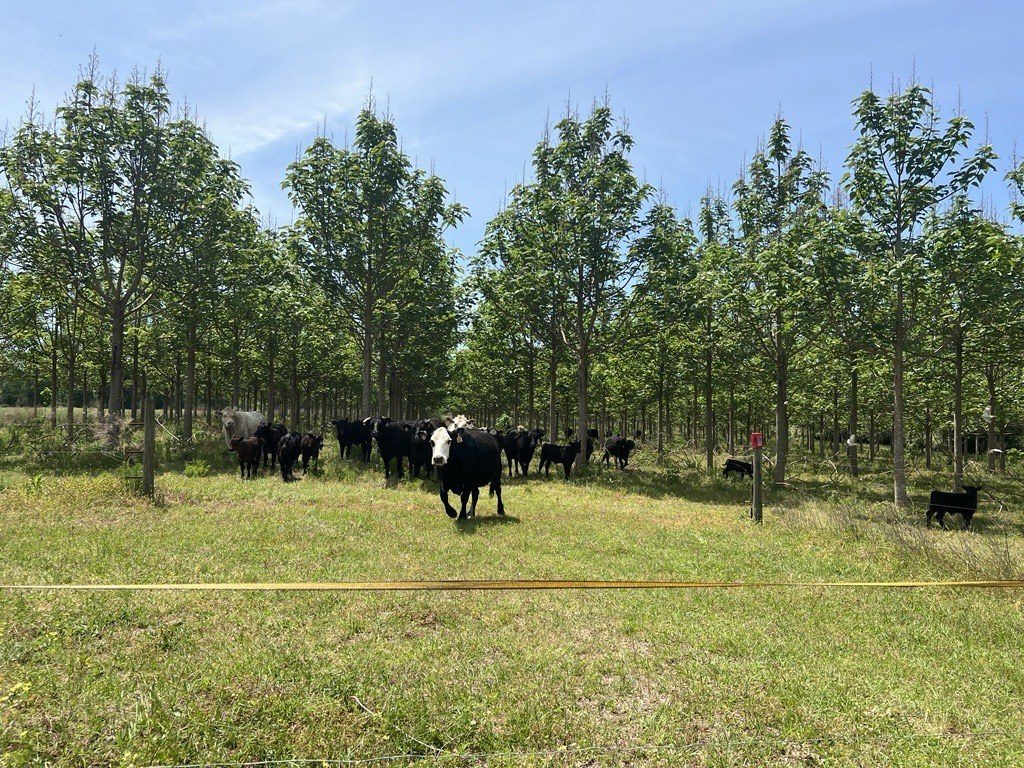
When you introduce grazing animals to your stand, start with light, intermittent grazing, i.e., on/off every few days. Chickens and other birds are great for managing insect pests in the early years. If pasture birds are used, ensure the trees are at least 3 feet tall before the birds are introduced.
Sunscald
Sunscald is a common problem on southern-facing slopes in the northern parts of our planting region. The sun's rays heat the thin bark and sap at a faster rate than the tree can withstand, causing fissures in the bark that can permanently damage the trunk and result in the loss of the log. To prevent this, apply white paint to the bark on southern-facing slopes to deflect the sun's rays and slow the heating.