
Following site preparation, the success of your Paulownia trees hinges on the care shown when planting them. Planting is one of the most labor-intensive and time-consuming tasks, and it should be finished within a week of delivery.
It is imperative that you plan well in advance for any additional help you may need. You should anticipate spending 1–3 days planting your trees; however, this largely depends on how many people are helping you and how many hours a day you are able to spend planting.
We will work with you to determine a seedling delivery date that will work with your schedule.
Tree arrival and handling
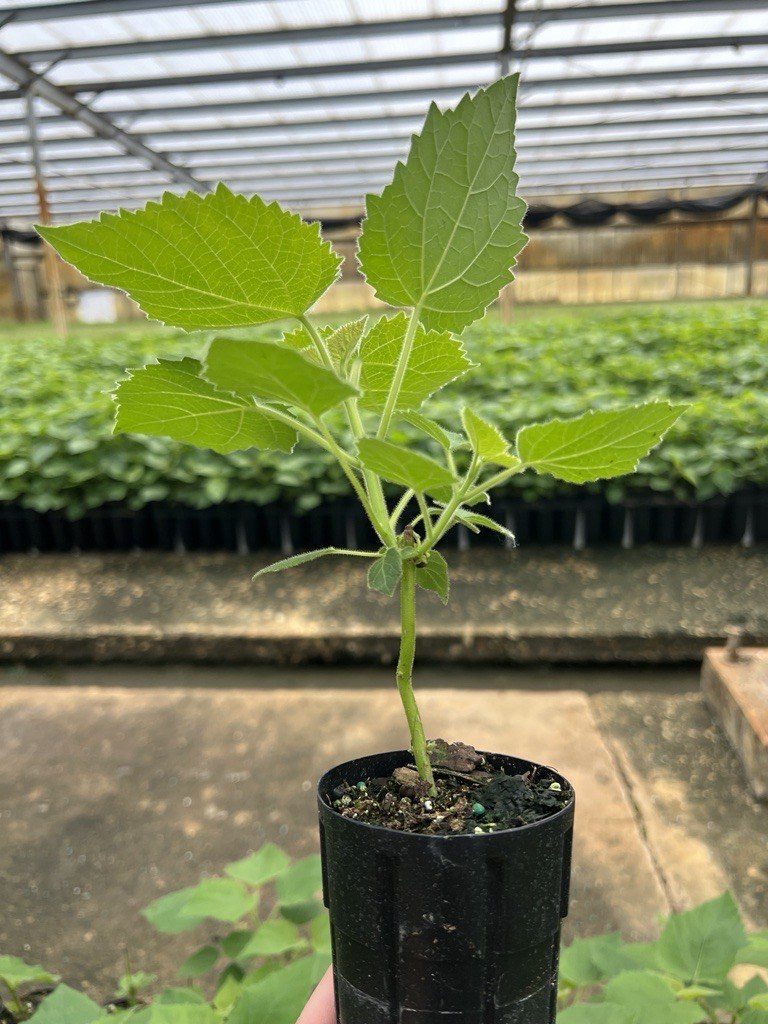
You will receive your seedlings in early spring. They may have more of a bush-like appearance than a tree form. This is normal and is caused by “top pruning” in the nursery. This practice creates field hardy stems, which promotes woody, secondary growth.
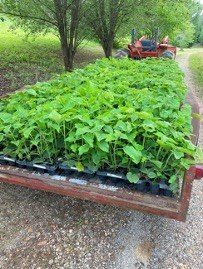
- Unload the trees and place them onto level ground in a semi-shaded position out of the wind.
- Young trees from the nursery are vulnerable to the stress of shipping and moving, so to minimize mortality and stress, they will need to spend about three days in partial shade to acclimate to their new environment.
- Do not place them in full shade; dappled shade is ideal.
- Avoid placing them on concrete or tarmac, which gets hot in the sun.
- Confirm the number and quality of trees sent to you by counting, reviewing, and signing the proof of delivery (POD) document accompanying the trees, and return the POD (either directly or by sending a picture) to your World Tree Representative.
- Contact a World Tree Representative immediately if discrepancies or quality issues are present.
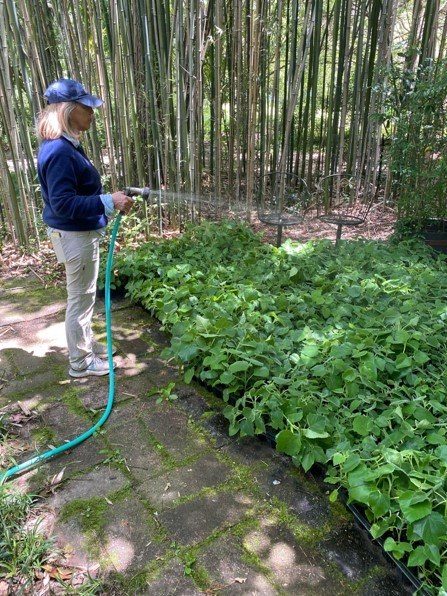
- Your seedlings will be in cell trays and will likely need immediate watering upon arrival.
- Avoid heavy splashes that will dislodge the soil from the cells, splash soil onto leaves, or push leaves down onto the soil.
- Over the next few days, water your seedlings in the early morning or mid-afternoon so that the leaves have time to dry before the evening to avoid the risk of leaf mold disease.
Timeline
The trees should be planted within 3–7 days of arrival.
Remember, the trees are growing rapidly at this stage. In just a week, the top will outgrow the pot-confined roots. So, if the growing conditions are not favorable, you can keep watering them in their cell trays for a few days, but they must be planted within 14 days of receiving them.
- Because planting is both time and labor-intensive, we highly recommend planning for help with this ahead of time.
- It will take a very efficient farmer planting without additional help the full 14 days to plant 1,100 trees. If you do not have guaranteed help during the planting timeline, we recommend planting no more than 10 acres.
- Please contact a World Tree Representative for advice if you cannot complete the planting within 14 days of receiving your seedlings.
- Unless a World Tree manager gives explicit instructions not to plant, failing to do so may result in a fine. Communicating with a World Tree Representative is the best way to avoid penalties.
Planting the seedlings
- Prepare your workers by showing them the correct methods to use when planting.
- We recommend having team members do separate jobs: pre-water (if the soil is dry), plant the tree, and post-plant water. Quality control is important at every step to get a high success rate.
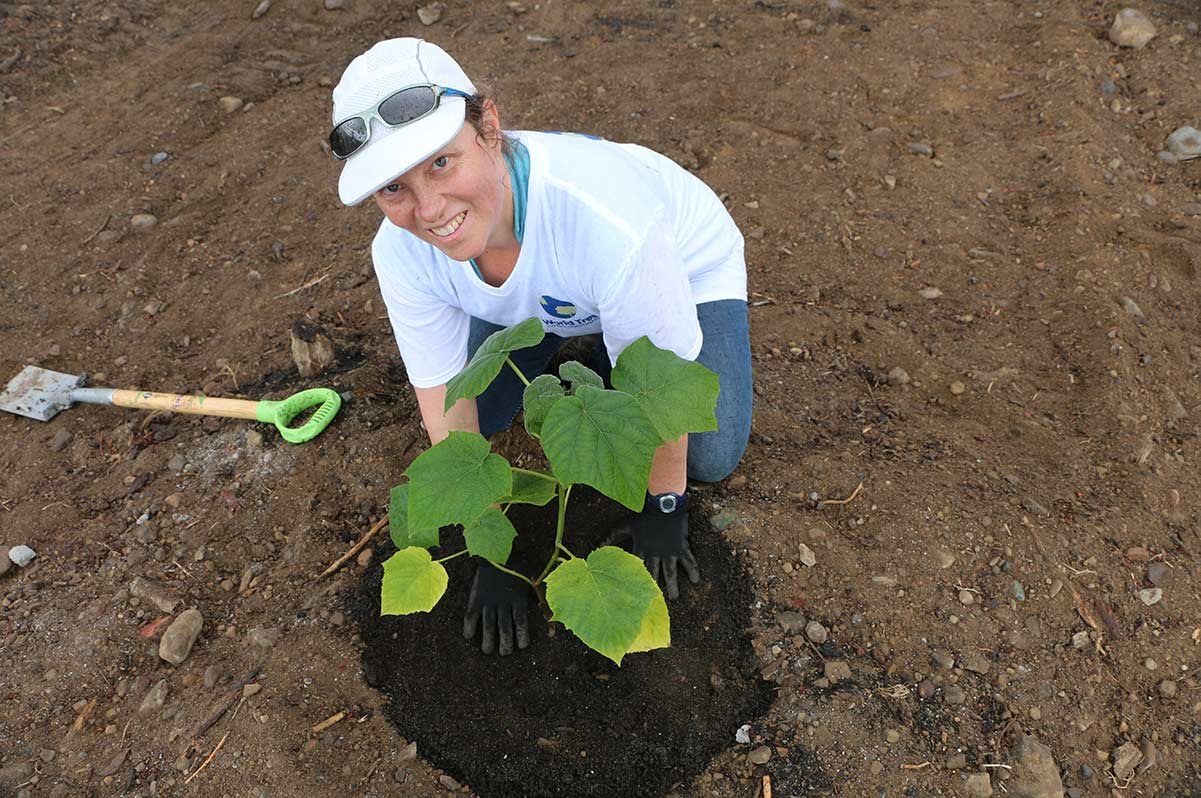
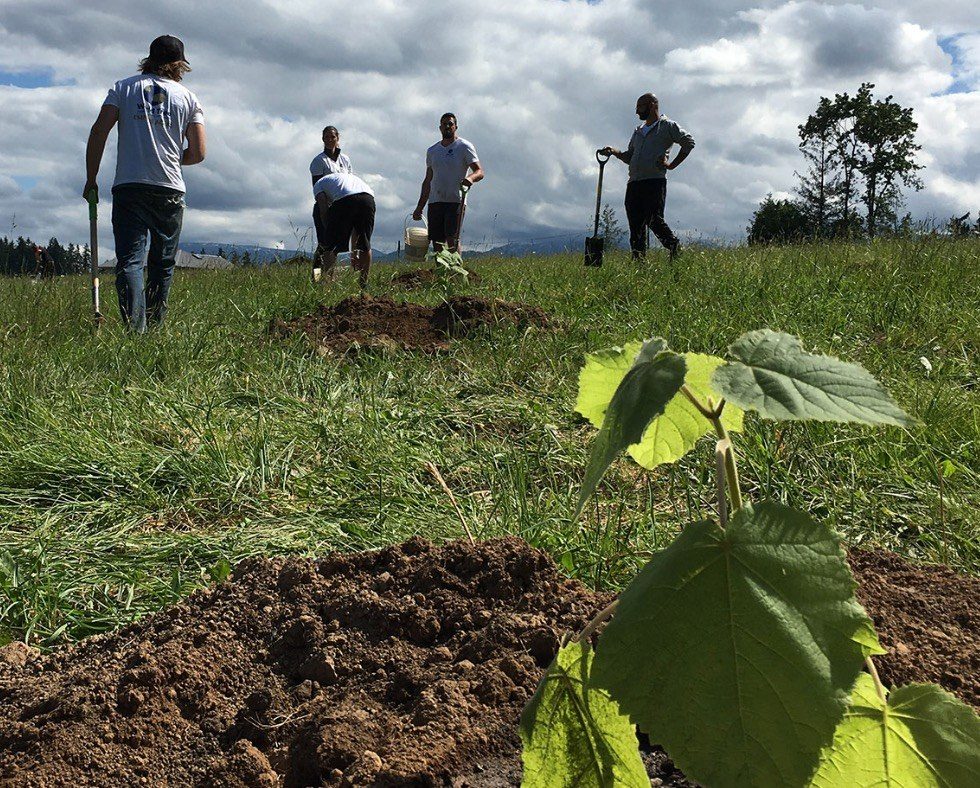
- Plant into moist soil.
- Dig a small hole a bit deeper than the cell plugs in the center of your prepared planting area.
- Gently remove the tree from the container and position it upright with the stem/root junction (or slightly above, depending on the soil type) at the natural soil level.
- Backfill around the plant with topsoil. Fill soil about ¼ inch above the root/stem collar. Pack the soil around the tree so it is supported but not so compacted that the soil will not adequately absorb the water.
- Your planted trees should end up sitting upright, level to the ground, in full sun, and not at the bottom of a slope where water can accumulate or pool.
- We also recommend creating soil berms or bowls around the trees so that water runs inward to the stem. The base of the stem should be at or slightly above ground level, not sunken into the hole.
- Supplement sunken soil with OM-rich soil.
- Carefully consider how your choice of compost and soil will affect:
- pH
- Water retention
- Ammonia levels
- Once planted, apply water slowly in the area (½ gallon or more per tree, depending on soil moisture). Give it time to infiltrate around the tree and tamp gently to remove any underground air pockets. Wash any soil off the leaves and stems while watering, and make sure all leaves are clear of soil when finished.
- An option to enhance your soil health at the time of planting is to add an organic soil conditioner containing beneficial bacteria. These soil microbes have been shown to stimulate the growth of root hairs, which help with nutrient uptake. A product we recommend for this is called Fish Shit, which can be ordered at Fishheadfarms.com.